The Use of the “N’ Word: A Review of Faulkner’s The Sound And The Fury

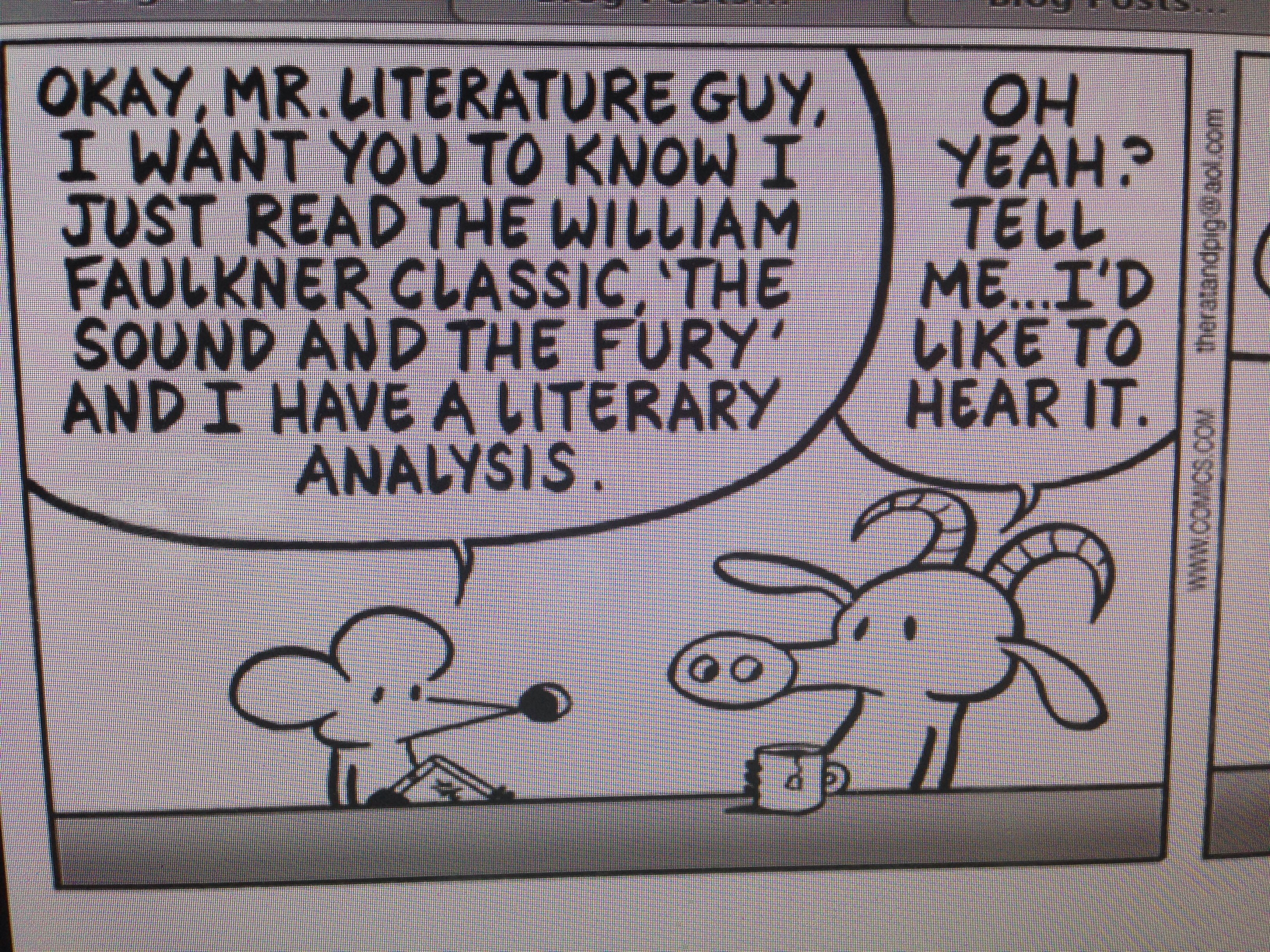
I must admit that I was challenged when reading Faulkner’s The Sound and the Fury in preparation for its theatrical production by the Elevator Repair Service ( I do not know the significance of their name).  The novel was first published in 1929. Having read Faulkner’s As I Lay Dying, (one of my favorite novels in high school) I was excited to hear that a play was going to be made of The Sound and the Fury, one of Faulkner’s greatest works. I wasted no time purchasing my ticket because I knew it would be a hot seller. I knew that I would have to read the text to better understand the play because Faulkner is a complex writer of southern literature who uses dialect and stream of consciousness to a great height to convey his themes. Thus, I approached The Sound and the Fury with great excitement and courage. I had about six months to read the book once I purchased my ticket (One would have thought that this would have been more than enough time).  Even though I had the novel for months, I waited until a few weeks before the show to start reading it. Unfortunately, as I started reading it, I knew that I would not finish the book in time.  The complexities of the characters and the stream of consciousness in which Faulkner wrote proved at first to be a hindrance to comprehension and to maintaining my interest.  imageWhen I saw the play, I also had great difficulty maintaining concentration because it followed the first chapter verbatim, with all its stream of consciousness and narration. I decided after the show that I would look back at the text and finish it no matter the difficulty, and that I would see the show again (Had I just disciplined myself the first time, I would have saved $55).  I am proud to say that not only did I complete the novel, but I am revisiting the first chapter again to see if it was as difficult as I first thought. Needless to say, since I now understand the character development, the first chapter now makes complete sense.
The title, The Sound and the Fury, is taken from Shakespeare’s Macbeth when Macbeth says, “…It is a tale Told by an idiot, full of sound and fury Signifying nothing.” Indeed this is a tale told by “an idiot and others, but it signifies everything. Faulkner creates a story in four chapters, with each chapter having a different narrator. The first chapter is told by Benjy, the “idiot”; the second chapter is told by Quentin, an obsessed older brother; The third chapter is told by Jason, a bitter and angry brother, and the last chapter is told by Dilsey, the “Negro” maid and child-rearer for the Compson family. This story is about the economic and social loss that a family faces as a result of some devastating events.  It is a story about the prejudices that people have toward others who are different from themselves ethnically, nationally, racially, and intellectually. It about making judgments about people without knowing anything about them. It’s about people believing that your genetic makeup automatically predisposes you toward either good or evil. Pejorative terms for blacks, whites, developmentally delayed people, and women are all used in the novel to give the reader a sense of the sentiment of the time toward people of various backgrounds. The novel is extremely detailed, and I cannot do justice in this blog to the many motifs of the novel. The use of the “N” word in the text will be the focus of this post. In keeping with the novel, I will use the word Negro when referring to African-Americans from the text. I will use nigger when it is used in the text, and I will use African-American when speaking of blacks during the current time period.

Faulkner exposes racial prejudice thoroughly. Throughout the text, he shows how deeply it is embedded within the American culture, not just southern culture. Quentin states in the novel,

I used to think that a Southerner had to be always conscious of niggers.  I thought that Northerners would expect him to.  When I first came East I kept thinking You’ve got to remember to think of them as colored people not niggers, and if it hadn’t happened that I wasn’t thrown with many of them, I’d wasted a lot of time and trouble before I learned that the best way to take all people, black or white, is to take them for what they think they are, then leave them alone. That was when I realised [sic] that a nigger is not a person so much as a form of behavior; a sort of obverse reflection of the white people he lives among.

In spite of these thoughts that Quentin espouses, he continues to use the “N” word contemptuously. Consciously he knows that people should be evaluated individually, but he still sees people collectively rather than individually. Is it possible for Quentin to cease this behavior? Webster’s dictionary defines nigger as a disparaging word for black people. If nigger is a behavior, and not a specific group of people, why do many African-Americans continue to use the word? African-Americans of various socioeconomic classes use the word as a term of endearment (As far as I am concerned there is no distinction between niggah, nigger, or any variation of the word). Throughout the novel, the blacks continue to call each other niggers. They never seem to see themselves as anything other than what they have been called. This is a case of art imitating life.

If a group of people have been called a pejorative term for hundreds of years, is it realistic for them not to think of themselves as the very thing that they been have been called? When a person is called something, it becomes normal to call oneself that very thing. It takes much self-determination to call oneself something other than what he has been called for centuries.  It takes even more self-determination to think of oneself as something else. If we as African-Americans are not able to see ourselves as something other than a nigger, how will anyone else see us for the intelligent people we are? How can we change the collective attitude of the masses? Is it even possible? According to Jason, the angry brother, “When people act like niggers, no matter who they are the only thing to do is treat them like a nigger.” He is referring to Miss Quentin’s (she is white) behavior. His comment about her reminds me of a black man on the train who said to a white man, “You are a dumb white nigger.” That was the first time I ever heard a black person call someone white a nigger. Clearly this was not based on the color of his skin, but based on the behavior. The comment, however was still disparaging.

Additionally, even the Negroes disparage each other. Dilsey, the African-American maid is no exception. When talking to Lester, she says, “Dont [ sic] you lie to me, nigger boy.” Furthermore, more evidence of racial prejudice toward the blacks to each other is depicted. For example, on Easter Sunday, “the Negroes” are expecting a great Negro speaker for their service. They have high hopes that this speaker will be someone great. Dilsey, the narrator, gives us a glimpse into the thoughts of the Negro congregants about the appearance of the speaker. She says when they see him, however, he is “…undersized, in a shabby alpaca coat. He had a wizened black face like a small, aged monkey.  The congregation looked “…at him with consternation and unbelief when the minister rose and introduced him in rich, rolling tones whose very unction served to increase the visitor’s insignificance.” We also know from the narrator that “When the visitor rose to speak he sounded like a white man.  His voice was level and cold.  It sounded too big to have come from him and they listened at first through curiosity, as they would have to a monkey talking.” Faulkner, thematically is saying that the “Negroes” too, judged a person by appearance.  Because the man’s voice sounded to big, the congregants thought he sounded like a white man. The narration reminds me of the many times when I hear African-Americans say that when, we, African -Americans talk “proper” we sound white.  African- Americans have expectations of each other based on race. When black or white people fall short of our ideals, we disparage them.

Faulkner was very ingenious in how he wrote the novel.  He makes serious statements about humanity’s prejudices from various angles.  The questions that we are left to ponder include the following: Is it possible for African-Americans to stop using the ‘N” Word? Is it too deeply embedded within our culture? Is there anything that can be done to make the word obsolete? Is it possible to stop prejudging people based on artificial classifications that do not determine character? Is character in any way determined by one’s blood? Let me know your thoughts. Comments welcome. A review of the play will be posted after I see it again on June 18, 2015.

Deirdre M. DeLoatch
Deirdre M. DeLoatch

Truth and Reconciliation in South Africa: A Review of A Human Being Died That Night

image
Fishman Space at BAM

A Human Being Died That Night

Fishman Space at the Brooklyn Academy of Music; Viewed on June 13, 2015; Closes on June 21, 2015

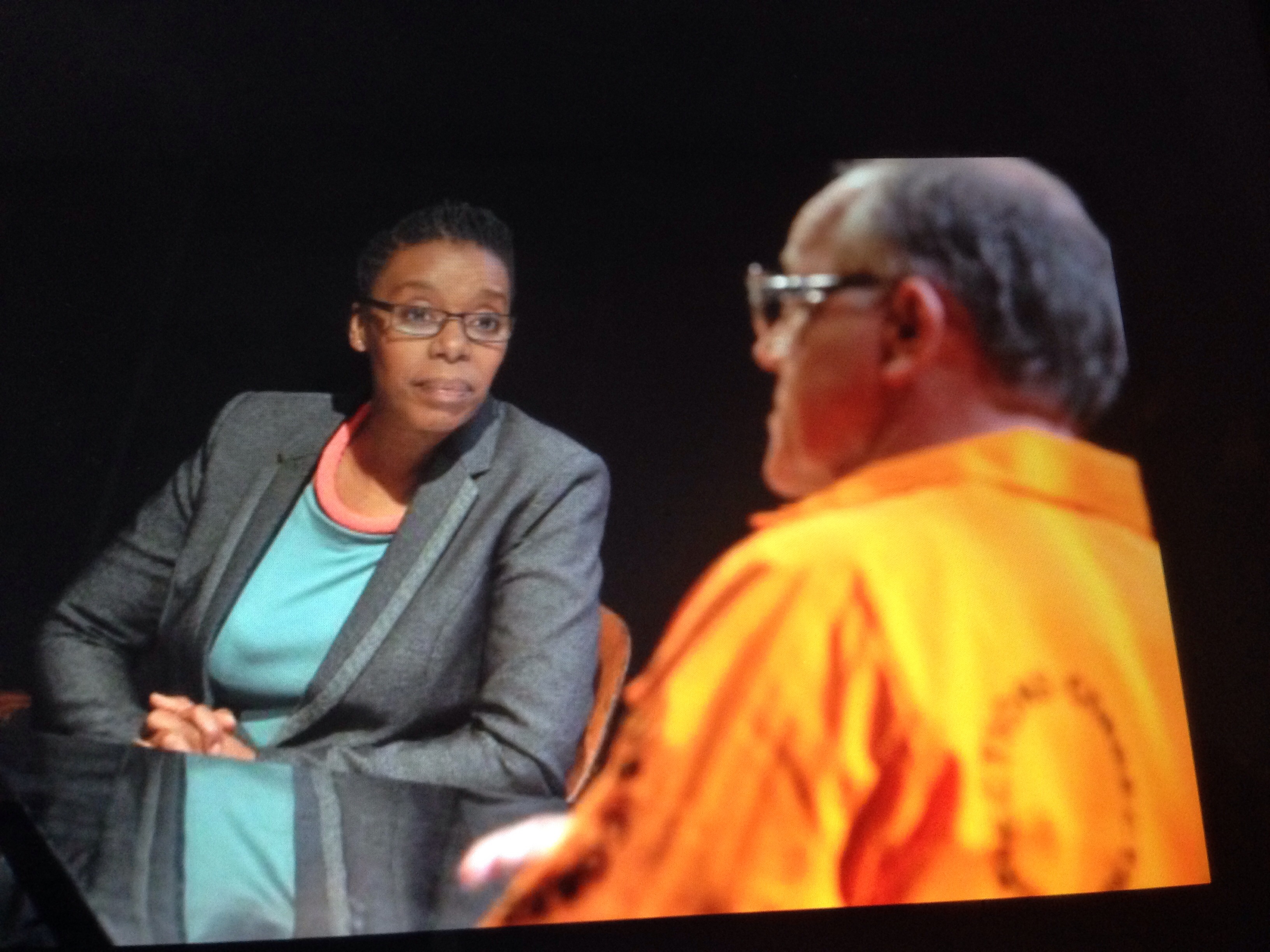
The Fugard Theater and Eric Abraham  (the publisher of the book) present the play, A Human Being Died That Night at the Brooklyn Academy of Music. It is based on the book by Pumla Gobodo-Madikizela. The play was written by Nicholas Wright and directed by Jonathan Munby.This play is an excerpt of forty hours of conversation between Madikezela, a psychologist, and Eugene de Kock, a convicted murderer, at Pretoria Central Prison during the apartheid era in South Africa. In this play, based on a true account of notorious killings in Pretoria, South Africa, Madikizela is played by Noma Dumezweni and de Kock is played by Matthew Marsh. It is primarily a two person show. In apartheid South Africa, the police were responsible for a covert counter-insurgency operation in which many black South Africans were killed by the police.  The most notorious assassin was Eugene de Kock, nicknamed “Prime Evil”.  de Kock was convicted of one hundred and twenty-one charges including nine murders. He was sentenced to two hundred and twelve years and two life sentences for his many crimes. He is still waiting for some of his accomplices who were never charged to accept the blame for their actions. Madikezela tells him that “When guilt is shared, it is hard for anyone person to feel the weight of it.” South Africa had previously abolished the death penalty, but de Kock applied for a pardon over a decade ago, and in January of this year he was granted parole.

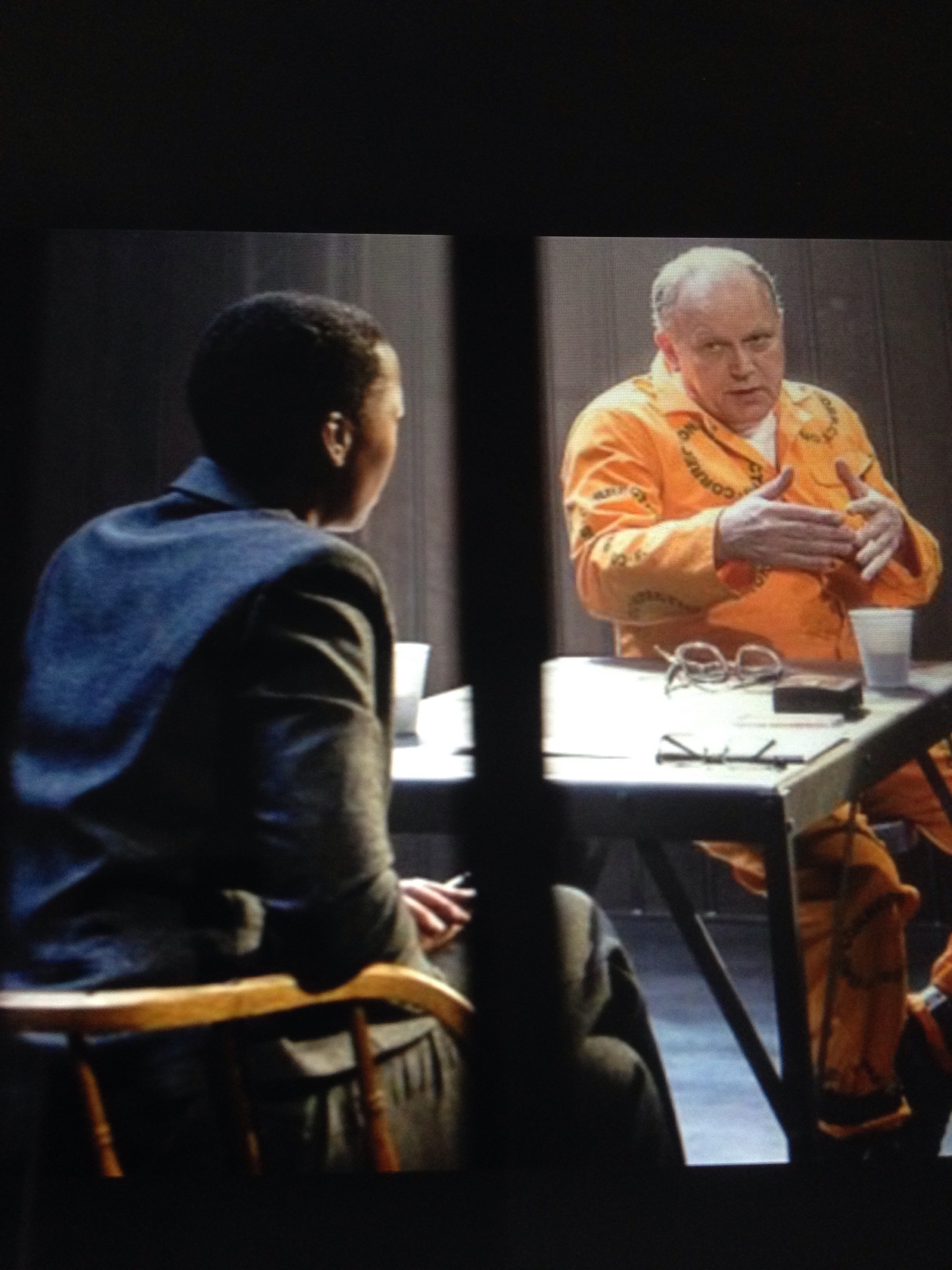
After the nullification of apartheid and the election of President Mandela, the Truth and Reconciliation Committee was promulgated to hold accountable those who were responsible for the assassinations of innocent South Africans. Madikizela was part of the committee. She visited de Kock and recorded their conversations to try to understand what happened during his reign of terror and to forgive him for his horrific acts. This theatrical performance is condensed to one hour and twenty minutes. Because the play is based on a series of authentic prison interviews, the play takes place in a “cell”  with limited movement by the characters. The audio design gives us the feeling of a prison as well as a constructed prison cell. There are very few props and the lighting is limited to light streaming on the two characters. Madikezela is dressed professionally and de kock is dressed in an orange prison jumpsuit until the end of the performance when he is given privileges because of his good behavior (this shows his transformation). It flows like a theatrical documentary, but the issues that are discussed and explored are relevant for all of us, regardless of race or domicile. Many social issues such as AIDS, domestic violence, and women’s rights are explored, but these issues appear to be forced into the dialogue and do not flow as well as the main issues of truth and reconciliation and the causes of violent behavior (whether violence is learned or innate).image

Humans have both the capacity for evil and the capacity for forgiveness. In the play, Madikizela tries to understand de Kock’s point of view. Through out many hours, de Kock acknowledges the truth; he details why he murdered many black men, women, and children. Through the overwrought dialogue, we get an accurate understanding of the thoughts and intents within de Kock’s heart. Specifically, he did not see blacks as human beings, although he never considered himself a racist. According to the taped recordings, all he saw was their color, and he said that he and the other police were prepared to defend South Africa at any cost. He stated that white South Africa had to know that South Africa was being protected. They did not care how they were protected as long as they had good schools and great homes. According to him “White South Africa needed a scapegoat and black South Africa needed a culprit.”  Rule by black men, according to de Kock, was the one sure way to destruction. They were prepared to save South Africa at any cost. He was encouraged by the police to “make a plan” regarding black people.  Making a plan meant for him to do whatever it took to ensure the death of black South Africans. That even meant killing black police officers who crossed over to the African National Congress threatening to expose the truth. He asked the question,” Did I do wrong? Did I know it was wrong?” He saw it as ” a bunch of great guys doing a tremendous job.” I am not sure at what point, de Kock repented for his actions, but he realized that the men he killed read the same Bible that he did. That was his first glimpse that he realized they shared some similar beliefs.

In spite of all the horrific acts de Kock committed, Madikizela both connects with him and forgives him. The wives of the deceased forgive him also, even though de Kock stated that he felt as if he were “doing the wives a favor” because of the belief that the husbands were unfaithful (based on stereotypes). At the last interview, de Kock asks Madikizela if she personally knew anyone that he killed. He stated that he believed that she would find it hard to forgive him, if he killed someone she knew. She said that she knew none of his victims. The victims’ families had to lay down their burdens instead of continuing to carry them. Listening to the dialogue and watching the action was difficult because connecting de Kock with the murders and listening to his confession was somewhat disconnected. It was easy to see that he was a human being who needed forgiveness and that he too was a victim of the racist policies of South Africa. Everyone throughout the world has been touched by race. We cannot escape it. We, like de Kock, have to work through it and forgive each other for the wrongs that we have committed in the name of race.

The play also explores possible motives and causes that lead a man to commit abhorrent acts. de Kock stated that he looked at himself as a crusader. He did not see that he was doing anything wrong. He stated that he had a typical childhood. As a child, he said, he was ridiculed for stuttering.  For him, violence “was an addiction that had a short-term thrill that left him hungry for more.”  He never saw himself as a racist because he said that he worked with blacks. Moreover, de Kock stated that one’s code of morality comes from “What you were taught from home.” He also stated, “I was not born evil. God would not do that to a small child.” He added, “Maybe part of my character was toward violence.” Through this performance one learns that it is easy for perpetrators to make excuses for the violence against the oppressed. No one regardless of race, social-economic status, or past history should treat anyone less than a human being. de Kock, through these intense conversations, came to the conclusion that political leaders sell their souls. He and the other police killed many, and that they fought for nothing. Madikizela comes to the conclusion that the “difference between good and evil is paper-thin.” We all have the propensity for evil and we all need forgiveness.image

This show is playing until June 21, 2015. Although it is dialogue heavy, the issues discussed are relevant for all of us today, whether you live in Israel, Myanmar, the United States, or South Africa. Let’s use this play to spur a conversation. I am not without my own racial prejudices, but  I strive daily to lay them aside and to see people as human beings first! Comments welcome.

*Personal note*

The Education and Humanities Department at BAM asked me to assist them in curriculum development for this play. They have secured the right to film it and to show it to students at a later date.  If anyone has any ideas, please feel free to share them. Thanks.

Deirdre M. DeLoatch
Deirdre M. DeLoatch

The Theater-goer’s Experience: Q & A

As a result of a recent theater experience, I decided to interview three people, Monifa Kincaid, Leandra Baynes, and Carine Darnell to get their ideas on their theater experiences.   As a result of the interviews, I hope that I can generate at least five regular theater-goers with varied interest to form a group that attends the theater about four times annually. The following questions and responses follow:

From left to right: Natasha Williams, Monifa Kincaid and, Ebony williams at BAM during intermission of Cedar Lake Contemporary Dance performance.

Question: How often do you go to the theater?

Monifa: I go a minimum of fifteen times a year.

Carine: I go about three to four times a year. I’m interested in attending more often with friends.

Leandra: I see a theatrical performance every couple of months as a treat.

Question: What do you look for in a play? Do you look at the set, the narrative, sound design, costumes, etc?

Monifa: “I look for whether the play is a fresh idea and whether the set is minimalist, whether the creative team is able to do much with little.  I also want to be entertained, but it’s the production team’s job to express its idea about what they have inside.  When people say they did not like a particular play, it may be because they did not understand it.  I ask myself the following questions: Is this the first time that I’m seeing this artist? Is this an experiment stepping away from what is normally done? Is it under rehearsed? Is the flow of the content together? The costumes are not a major factor for me, but there must be a relationship of the costumes to the ideas expressed in the performance.”

Carine Darnell, Theater-goer
Carine Darnell, theater-goer

Carine: “I like musicals.  I like the singing and the dancing, but if I go to a play, I go for the story and for the acting. I love to hear live music and to see how well the show incorporates music. “I look at the whole production. Specifically, “I like to be entertained and to escape my reality.” I pay attention to the costumes to see how well they match the story.

Leandra:” I go to the theater to have a sense of culture, to set myself apart from some of my peers. I like a good story set in motion.”

Question: Do you pay attention to reviews?

Monifa: “I do not want to know everything about the show ahead of time.  I’ll make up my mind when I see the show instead of prejudging.  I like to stay open to the ideas of the show.  A theater-goer should experience something different often.  You should not see the same thing all the time.  Are reviewers there to support the arts or are they there to tear down and divide? I do not like over critiquing, nitpicking, and over evaluating.”

Carine: “I do not read reviews. I do not search them out. I like to be familiar with the story, but I don’t read what critics say.  It may help, but it is not necessary.”

Leandra: “I read about the theater itself because I want to know the condition of the building.  Can I sneak in snacks? Will the ushers be available ? Is the sound good and things of that nature? I bypass actual play and movie reviews because everyone’s taste is different. I read about the stories on which the plays are based before seeing them and research the plays as best I can.  I try to determine the shows I’d like to see by what they are about and sometimes by who’s in them.”

Question: Is the story the most essential part of the performance?

Monifa: “The narrative does not matter to me.  It can be loosely knitted. I look at body movement to interpret the story. I look at the set and I look at the story through a variety of lens. The music ties the story together.  If the genre of the performance is dance, there has to be an overall theme.  It does not have to have a narrative.  Sometimes, there is nothing for you to get, just experience.”

Carine: I like a good story, but it is the entire performance that I evaluate. I look at the set to reflect on the story. ” I go for the overall experience.  If the set doesn’t detract from the experience, then it is okay.”

Leandra: “The story is the most important with sound coming in at a very close second.  The story is what first gets my attention.  The music can move the imagination.  The slightest pitch at the right time can complete a scene.”

Question: Do the other creative elements of the play matter?

Monifa: Sometimes creative teams do not have the money.  If that is the case, then the play should be scaled back to fit within the budget.  “Don’t let the lightning, the blocking, the costume design take over if you don’t have that budget.”

Carine: I look at the entire production.

image
Leandra Baynes, theater-goer

Leandra: Only the sound design is what I focus on.  It helps me understand the show.

Question: Do you make a decision to see a show based on who is starring in it?

Monifa:  “I like to see performance of groups or artists that I know nothing about.”  I’ll go because “someone recommended it or because it seems interesting.  I’ll show up with no preconceived notion. I feel like I’m learning and discovering something new every time I step into a theater.”

Carine: Sometimes I go to see productions of actors with whom I am familiar.  For example, I saw Jesse Tyler Ferguson in a play once.

Leandra: “I tend to lean toward my favorites,” when deciding on the play in which I’m interested.  The reputation of someone may make me see the play and I give him or her the benefit.  For example, I liked NeNe Leakes in Cinderella.

Question: How do you feel about technology being used to enhance a performance?

Monifa: I prefer it not to be included.  They use it as the highlight instead of using it to accent the show.  “I don’t like computer generated images.  I don’t need the bells and whistles.”

Carine: “I don’t go expecting technology.”  It makes it more memorable.  I don’t miss it if it’s not there.  It is an added bonus.

Leandra: It is not important to me and sometimes it is distracting.

Question: After you have seen the show, do you discuss it afterward or read about it?

Monifa: “I usually discuss the work with someone and definitely recommend the performance and help to promote it through social media.”

Carine: I don’t normally discuss the show afterward. If I know someone who has seen the show, I may talk about it with him or her.

Leandra:” I tend to dwell on a very good play or movie for a few days after I’ve seen it.  I work it into conversations.  I research unknown actors.  I look up locations and references made during the performances.  If I feel very strongly about it, I recommend it to others via social media, but I try not to give bad reviews with as much emphasis.”

****************************************************************************************************************************

Deirdre M. DeLoatch
Deirdre M. DeLoatch, blogger

We all have varied interests in the performing arts, but we all have one thing in common. We enjoy a great performance. Let’s start a club that meets purely to see a few shows a year.  Let’s have good lunch and great discussion about the show (that is if we attend a matinée performance). If you know someone who is interested, have him or her leave a comment on my blog or on my upcoming Facebook page for my blog- All the World’s a Set or alltheworldsaset.wordpress.com. Let’s start a conversation.

Coming of Age: Me and Earl and the Dying Girl

image
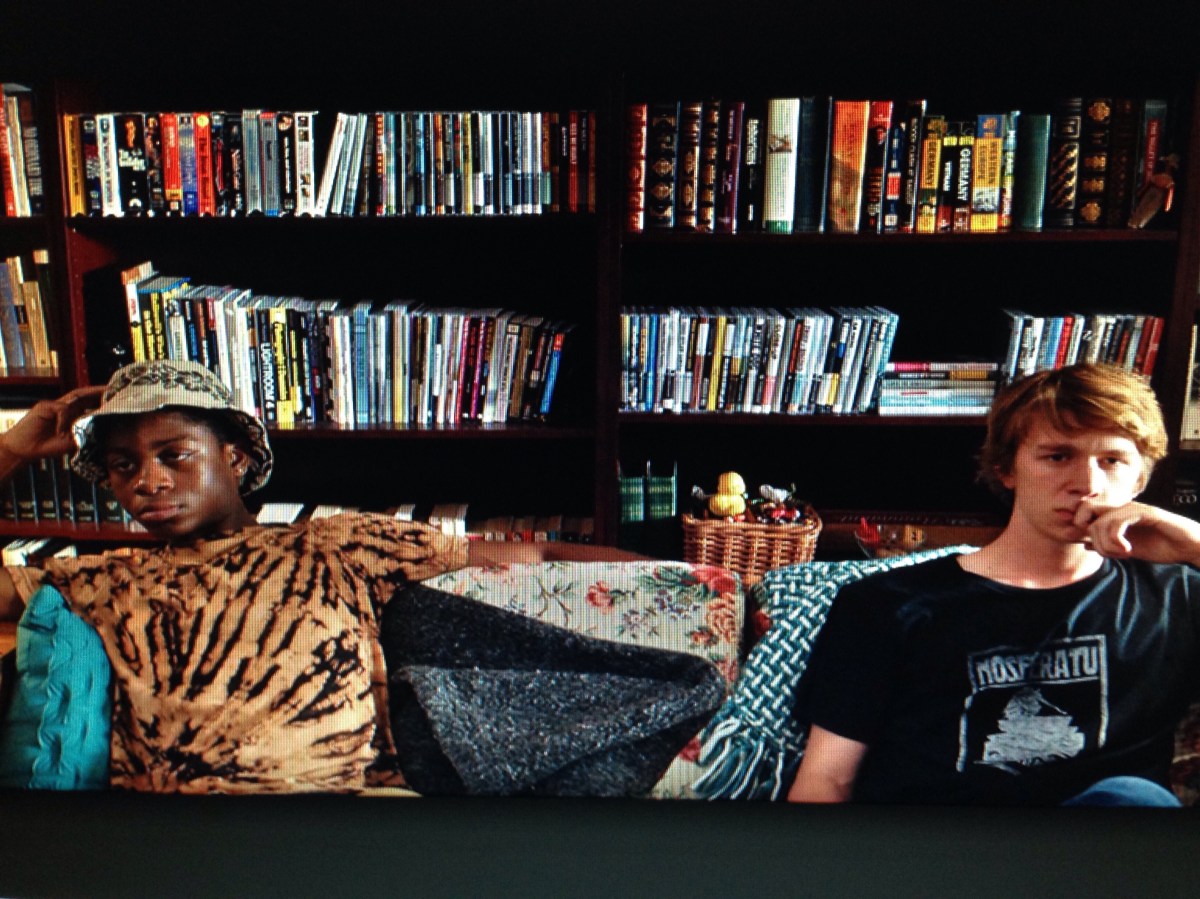
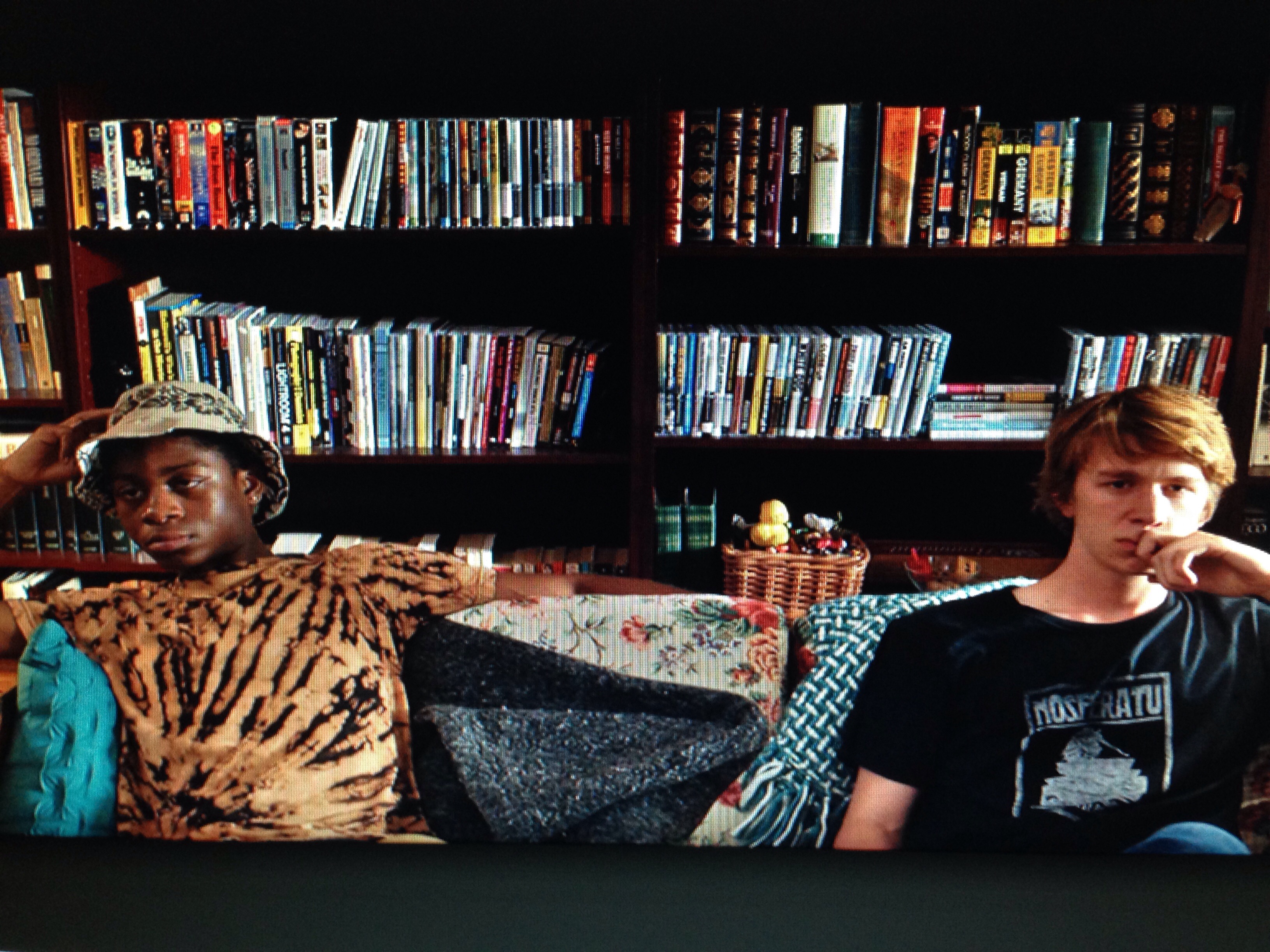
Earl and Greg watching their remake of a classic film while surrounded by a library of great books and great films.

Alfonso Gomez-Rejon’s Me and Earl and the Dying Girl, a hit at the Sundance Film Festival, is a film starring Thomas Mann, as Greg, RJ Cyler as Earl, and Olivia Cooke as Rachael. The film is a bildungsroman, (coming of age story)  adapted from the young adult novel by Jesse Andrews about the value of friendship and how it sustains one through some of the most daunting times in life. It’s about the awkwardness of character, the feeling of not belonging, and the loneliness that it can bring. It captures the essence that “Life is for Service” even if that means serving one’s friends. Additionally, Me and Earl and the Dying Girl is an independent film mostly about Greg, a senior in high school, and the relationships that he has with his best friend (although he is afraid to acknowledge him as his best friend for fear of losing the friendship), and Rachael, a girl at his school who is dying from leukemia. Although he barely knows her, Greg’s mother coerces him to spend time with Rachael and he acquiesces.  It is through this resistance that we come to know Greg. Greg and Earl, through the prompting of Rachael’s friend, decide with reservation, to make a film for Rachael in order to encourage her during her illness. Through this film, the true meaning of friendship becomes evident. The story shows us that a friend loves at all times and that friendship is not without conflict and not without disappointment.  One must be willing to set his hurt and disappointment aside in order to support a friend during “the best of times and the worst of times.” This film has great writing, great structure, great acting, great cinematography, and a beautifully sentimental ending.

image
From L to R: Thomas Mann, Olivia Cooke, and RJ Cyler
image
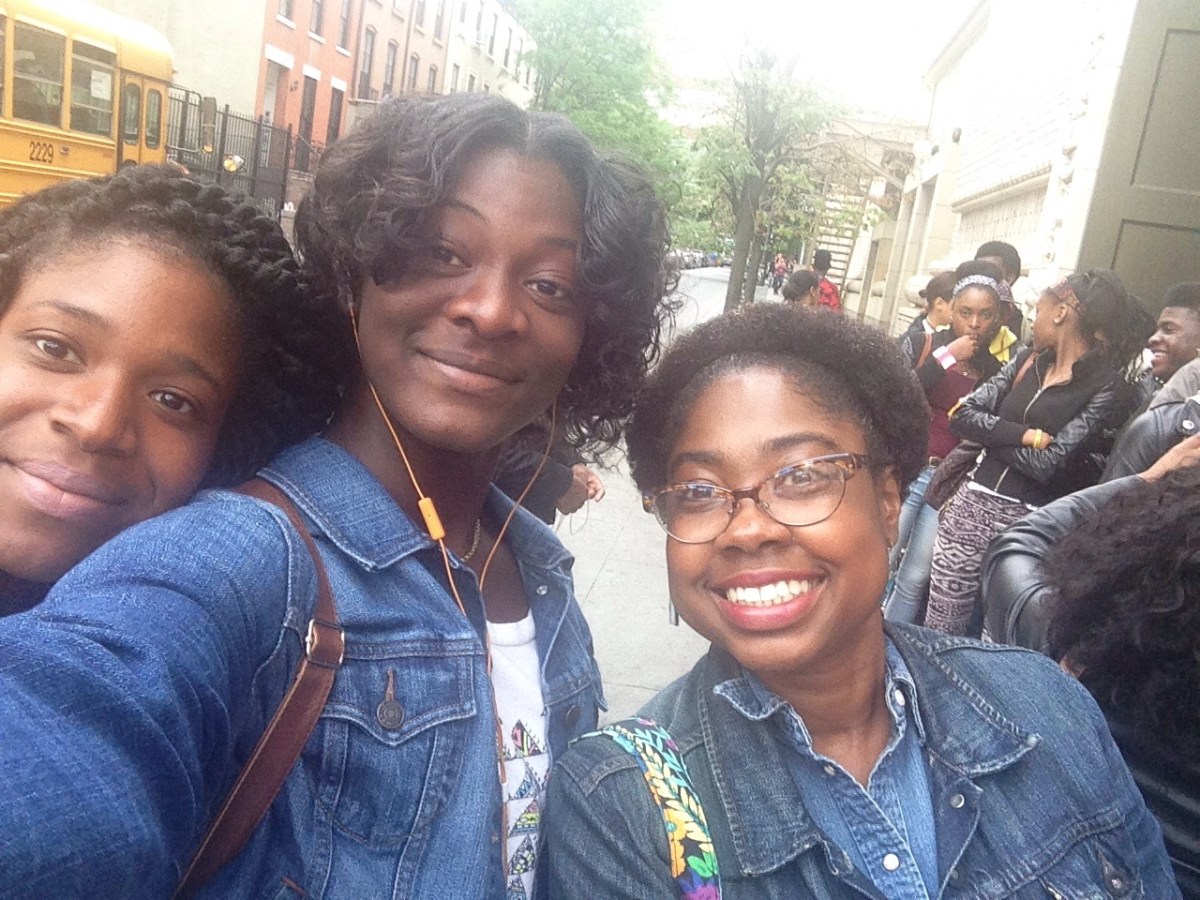
Eating breakfast with students who survived the turmoil of high school. L to R: Sheinese Clement, Kenisha Fraser, the selfie queen, and me.

The screenplay with intermittent narration, staged in parts that reflect the sentiments of the characters during their last year in high school, accurately depicts teenage life for many students who have a low opinion of themselves and who do not seem to fit into any social clique. As a result of feeling alienated, Greg and Earl bond with one of their teachers who appears to be as unconventional as they are. The film captures the loneliness of life and how one can have esoteric interests that cause friendship with others to be limited. Greg’s interest in foreign cinematek causes him to only have one friend, Earl.  He and Earl parody classic films. They spend most of their time having lunch with a teacher because they do not engage positively with other students in the cafeteria, a place of conflict that they rather do without. Their teacher has taught them pithy maxims such as “Respect the Research” and “Life is for Service.”   All that matters in the end is friendship and having someone who will be supportive through the worst of times.  These friends do that for each other. Each part of the film shows them in different locations and how their friendship develops.  We see Greg at home, at school, and at Rachel’s home.  There is conflict in every part of the film. The narration helps us understand Greg’s internal feelings and struggles and shows us how he navigates through the conflict.

The casting for this film is perfect. Each actor fully captures the essence of his or her character. Through the language, through the nonverbal communication and through gesticulations, the audience is able to see the characters develop over the course of the film. These actors act with great style and originality.  Mann accurately portrays, through his body language, a student who is having difficulty accepting himself. The way he moves, the way he holds his head, even his speech cadence is of one who has a low self-esteem. Cyler, who may be seen as stereotypical, is not at all stereotypical. Although he lives in an impoverished neighborhood and he knows how to fight, he is anything but the stereotypical African-American young man.  He shows his love for his friend, Greg, with deep heart-felt action. He moves and dresses with a style all his own. The rhythm with which he walks and his articulation of speech keep the audience in tune with the action. The fight scene between him and Greg was awesomely choreographed, although fighting is not condoned. With Greg’s low self-esteem, it was clear that he would not have the fortitude of character to win the fight, even if he had the strength to win.  Also when Earl comes to rescue Greg during a fight, Earl is at his best in the film. Olivia Cooke, was great from beginning to end. Her character was the tool used to help Greg understand the true meaning of friendship. The scene with her and Greg near the end of the film evoked much emotion from me. I could feel both the happiness and the sorrow from Cooke’s actions. While watching the film that both Greg and Earl made for her, I could feel the emotional pain that Rachael experienced and its impact on Greg.

The cinematography gives an added dimension to the play.  We see video of the homes of the characters, video from the characters themselves, and from different vantage points or angles. Parts of the film include films within the film itself. The cinematography by South Korea’s Chung-Hoon Chung captivates the audience.  Many of the images are filmed to allow the audience to look at the action from different angles which helps us to feel more depth of emotion. The length of the stairs outside and inside of the house symbolize the difficulties that Greg and Rachael both face.

I wholeheartedly recommend this film. The set design, the cast, the acting, the cinematography all make this one of the best films so far this year. Do not delay. People of all ages will enter into deep reflections of their own lives after viewing this film.

*Two Personal Comments relating to the film*

On a personal note, I as an adult, can relate to the awkwardness of having esoteric interests.  I too can relate to not fitting in with my peers. I too am a film enthusiast.  I often watch foreign classic films and classic films of various genres.  I too wish to become a filmmaker so that I could document the events going on around me.  Sometimes these arcane interests can leave one feeling alienated by others who do not understand your passion for such films. One must, however, be confident in character, and continue to pursue what makes one happy. All of the challenges of life have helped me to work through the difficulties of life so that I could see the value of a few good friends, rather than many.  We teachers and parents should help children work through the challenges of adolescence.

Also on a personal note, the film, Me and Earl, and the Dying Girl,  has special meaning to me on another level. Over the last two years, I have known a student who has been suffering with cancer in several forms.  He has battled this disease with both courage and determination to overcome its devastating effects.  He, his mom, sister, and brother have all suffered with him through multiple surgeries and through chemotherapy, through which this disease continues to hang on. As I watched the film, I could not help but reflect on how much strength and courage it takes to overcome the emotional turbulence that this disease brings.  I give kudos to him and his family for remaining steadfast and brave throughout this crisis.  Bravery does not mean the absence of fear, but the ability to move forward in spite of the fear.

Deirdre M. DeLoatch
Deirdre M. DeLoatch

More Than a Tempest in a Tea Pot!

Starring Sam Waterston and Jessie Tyler Ferguson

The Public Theater presents

The Tempest

 at the Delacorte Theater in Central Park

(near 79th and Central Park West).

Performances run until July 5 at 8pm

Now in Previews

Running Time: 2hrs and 45 minutes with one fifteen minute intermission

Viewed on May 30, 2015

The Public Theater, as part of its Shakespeare in the Park series is featuring The Tempest starring Sam Waterston as Prospero, Jesse Tyler Ferguson as Trinculo, Francesca Carpanini as Miranda, Louis Cancelmi as Caliban, and Chris Perfetti as Ariel.  The Tempest is directed by Michael Greif. The scenic design is by Riccardo Hernandez, and the sound design is by Acme Sound Partners and Jason Crystal.  The Tempest is thought to be Shakespeare’s last play.  Joseph Papp, the founder of The Public Theater envisioned that the public would have free access to theater.  As a result, the Shakespeare in the Park series was born.  Each summer, two plays are featured at The Delacorte Theater. Typically both plays are Shakespearean.  At the end of the summer, The Public Theater has a Public Works program in which people from the five boroughs participate in a Shakespearean play, also at The Delacorte.  After having seen many Shakespearean performances over many years, I look forward to getting in line at 5:30am outside of Central Park, and being ushered into the park at 6am and waiting for six hours to receive the free tickets. The experience is usually pleasant and it’s an opportunity to meet like-minded individuals. I have only not received a ticket once since starting this annual ritual in 1987.  This play uses props, sound and minimal set design to convey the greatest tempest, ushering the audience into an intriguing narrative.

The Delacorte Theater

The Tempest is about a magically induced storm that hits a ship carrying Trinculo, Antonio, Alonzo, and others.  The tempest, however, was all orchestrated by Prospero, the former Duke of Milan.  Prospero, the protagonist, and his daughter, Miranda, have been on an island for twelve years. While on the island, Prospero begins to tell his daughter that when he was the Duke, his brother, Antonio, usurped his position.  He and his daughter have survived on the island because of materials left on the island. Both Prospero and Miranda were abducted by his brother and by Alonzo, the king of Naples and were placed on the island. Prospero has magical powers garnered from what was left on the island.  It is with these magical powers that Prospero manages to get even with his brother and with Alonzo, allowing him to create a plot with Ariel that helps restore him and Miranda to their rightful positions.

A great play allows the audience to be either riveted or captivated by the various elements of the entire theatrical experience. The Tempest is such a play. The most creative elements of the play are the scenic design, the props, and the sound design that allow the audience to experience the tempest along with the cast. In the opening scene and in other acts of this play, I felt as if i were in the tempest.  The lightning and thunder crackled as if they were real. The sound had precision and caused fear within the cast on stage and within the audience. There was a musician placed stage right, slightly in view, that played gentle and intense notes of classical music periodically during the performance. The music was subtle at times, but seemingly all at the right moments to depict some of the tension within the narrative. Props were used to maximum effect; there were huge swaths of material, similar to flags, that the actors held and swayed to mimic fierce wind.  The costumes also portrayed intense weather.  The actors wore rain coats that were previously wet to portray an intense storm.  The backdrop for the set was that of an ocean and many of the props were related to life at sea or at the shore.

The acting of several of the characters was both engaging and creative.  Caliban, the antagonist, malevolently played by Louis Cancelmi, gives us more than a glimpse into the underworld. He has been Propero’s slave while on the island. Calcelmi’s acting gives us insight into his vindictiveness against Prospero.  The costume that he wore was both dingy and dirty. It accurately depicted the underworld.  Ariel, the spirit who serves Prospero, is so nimble and agile that he moves gracefully across the stage to the extent that it is easy for the audience to believe that other than Prospero, the other characters on stage never see him.  He evokes sympathy from the audience because it is easy to see his goodness, thus the audience can silently root for his freedom from Prospero. Jesse Tyler Ferguson is exceptionally funny as the jester, Trinculo. His costume as well as the method in which he articulates language evokes playful laughter from the audience.

Sam Waterston as Prospero played his part well.  He appeared to have a cold because he coughed many times during the first hour.  He also had a large cup of liquid from which he periodically drank. His sipping from this kingly chalice was nicely woven into the story.  About one hour into the performance, he appeared to be feeling better. He was a prime example that “The show must go on.” The intensity of his emotions when talking to those he cares about most was shown. In the scene in which his daughter Miranda is going to marry Ferdinand, he strongly admonishes Ferdinand about not becoming intimate with his daughter before time. He warns Ferdinand sternly and as he delivers this speech, I chuckled because although he was serious, I could not help but chuckle because of the words themselves coupled with Waterston’s steadfastness. Moreover, as Prospero sets Ariel free at the end of the drama, Prospero’s desire to fulfill his own promise is evident and Ariel is set free.

Jesse Tyler Ferguson and Sam Waterston

This play is wonderfully engaging.  I will likely see it again this Saturday, June 6th. Do not delay.   The experience is worthwhile and how can you have a better experience under the stars- that is if there is not inclement weather. The next play after The Tempest at The Delacorte Theater is Cymbeline, one of Shakespeare’s lesser known works. It runs from July 23 to August 23, 2015.

Four ways to get tickets:

*Free distribution in Central Park at 12noon (line starts forming early before 6am.)

*Free virtual ticketing lottery (I’ve never been successful at getting tickets that way.) *

Free downtown lottery distribution at the Public Theater (I’ve never been successful with that either.)

*Skip the line and support free Shakespeare. ( for a sizable donation of $200 )

Personal Comment

Wendella Wilson and Me at The Delacorte Theater

On a personal note, I had the privilege of taking Wendella, one of my most brilliant students with exceptional character, to see The Tempest.  I had been asking students for a number of years to meet me at the Delacorte Theater during the summer so that they could learn to appreciate Shakespeare.  Recently, Wendella saw Jesse Tyler Ferguson on Jimmy Fallon speaking about his role in The Tempest. That ignited Wendella’s interest because she knew Ferguson from Modern Family. Additionally, this year because we had a large Shakespeare unit with a teaching artist, the students along with Wendella were able to perform scenes from Romeo and Juliet, thereby learning to appreciate Shakespeare in spite of its complexity. Furthermore, as a result of Wendella spreading the information about the show on Facebook, many other students are now looking forward to seeing live performances of Shakespearean works. For that reason alone, rising at 4am was worth it!

Deirdre M. DeLoatch
Deirdre M. DeLoatch

Music and Dance : Who Could Ask for Anything More?

Now playing at the Palace Theater on Broadway.

Viewed on May 28, 2015

image
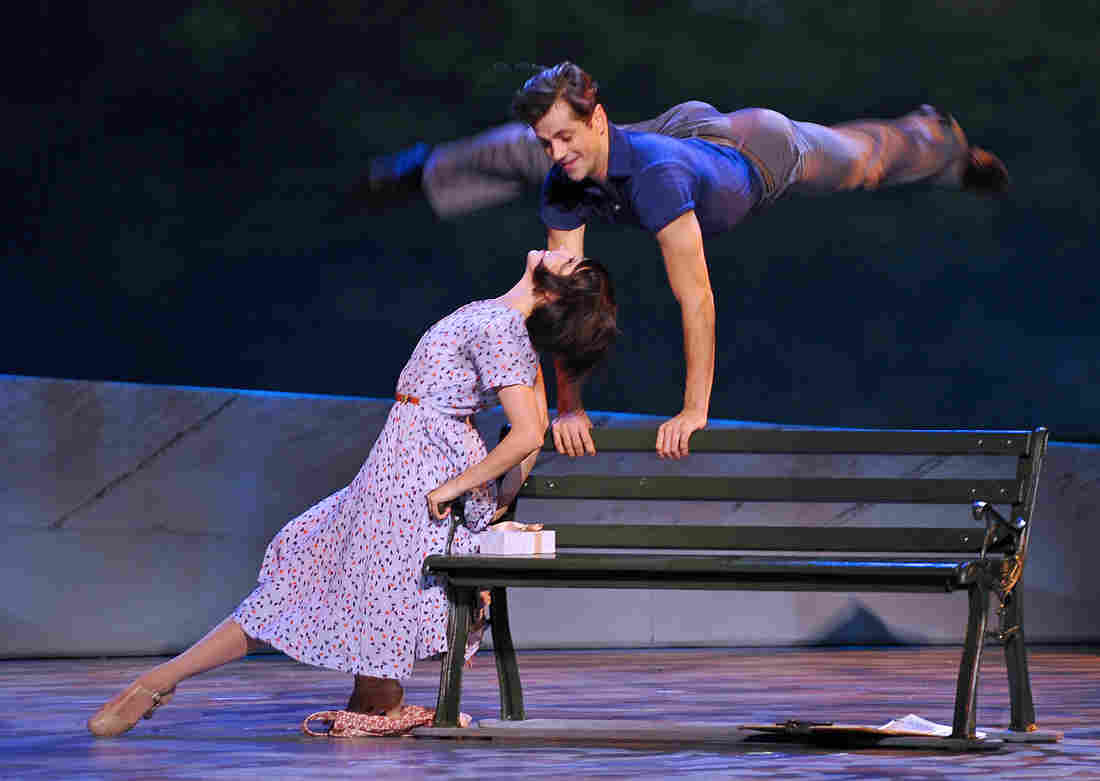
Robert Fairchild leaping over props. Used with permission.

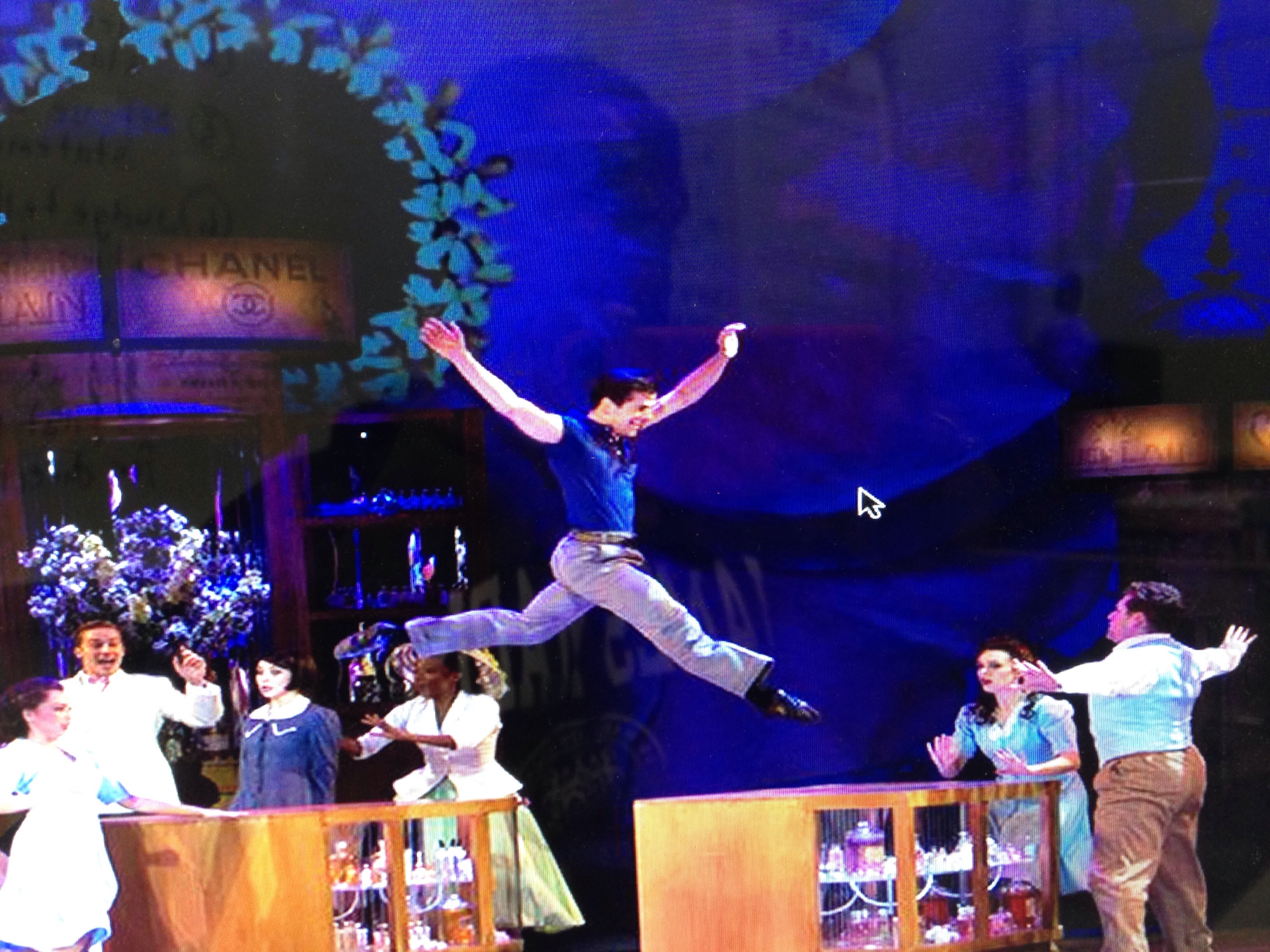
Having spent a semester in paris during the eighties, I am particularly enamored with all things Parisian. I love the language, the food, the architecture, the historical places, and the art.  All of these things make me smile. When I first heard that An American in Paris was coming to Broadway, I knew that I would imminently see the show. Because I am a movie enthusiast, I looked forward to seeing the musical rendition of this film. Although Paris is just the setting of the show, the writer, Craig Lucas, manages to infuse some of the language and the culture of Paris into An American in Paris. The musical is both directed and choreographed by Christopher Wheeldon, a former dancer for both the New York City Ballet and for the Royal Ballet. This musical is his directorial debut.  The creative team includes: Robert Fisher, musical arranger, Bob Crowley, set and costume designer, Craig Lucas, the book’s author, and Natasha Katz, lighting designer.  The principal actors are Robert Fairchild who plays Jerry Mulligan, the American, and Leanne Cope, who plays Lise Dassin, the woman he loves. Having received twelve Tony nominations this season, An American in Paris is one of the forerunners for best musical. In An American in Paris, the dancers leap and move flawlessly, holding the attention of the audience as it waits to see whether the dancers will land dynamically with precision.  They leap over furniture and dance in tandem to music by George and Ira Gershwin. After careful reflection, I wondered what was most important in a musical. Was it the music, the acting, the dancing, or the story? Does a theater-goer go to the theater to see the creative set design, the lighting, or the audio? Do the traditional conventions of theater matter? I have come to the conclusion that normally a great well-defined story is essential, but if there are other great strong creative elements, then the musical may be catapulted to even greater heights.

Charles Isherwood of the New York Times said that this musical is typical of Broadway musicals. This comment was not pejorative, but intended to show that it maintains the typical structure of Broadway musicals. I disagree; it is atypical. I believe that there is significantly less singing (not less music) than in traditional musicals and the story is less defined. The acting is mostly encompassed within the dance compositions. At the inception of this performance, I was disappointed, because I was accustomed to a traditional musical with a more well-defined plot and more intense acting and singing. I, however in the end, came to see this musical as levels above a traditional music, for the dancing and the choreography of this musical is veritably unparalleled. The costumes for the dancers and for the prima dancer, are exquisite.  Although the story is less developed in the first half, it becomes more defined during the second half. After intermission, the action and the tempo rise in the musical to a pace that allows the audience to become captivated by the arrangement of Gershwin’s music and by both the dance and choreography. The story becomes sharper as the dancers leap in grande jete fashion into the air and over props, further enthralling the audience and causing the viewers to applaud and say bravo at the end of the performance.The dancers seamlessly integrate dance and music within the choreography with contemporary and jazz vernacular.

An American in Paris is the story of an American soldier, Jerry Mulligan, who decides to stay in Paris after the Great War so that he can become a painter. He meets Lise Dessin, a Jewish woman, who was hidden by a French family during the war. He soon realizes that he is not the only one trying to woo her. She feels, however, an allegiance to the French family, especially the son, Henri, expertly played by Max Von Essen.  Lise is an accomplished ballerina and she works to hone her craft so that she can perform adroitly in a performance. The story is about love and internal conflict. This story is about staying true to oneself and about reconciling conflict so that true love prevails.

This musical was all about the dancing, the choreography, and the music that make this show a stunning success, not the story.  It has the audience wanting more at the end.  The dancers demonstrated a variety of movements including pirouettes as they use props when leaping perfectly in such a way that one’s eyes remain focused on all of the movements.  The chemistry between Robert Fairchild and Leanne Cope is strong and it keeps the audience hoping that they will work through their conflict so that they can be together. The dancers light up this show with their bright resplendent costumes. Toward the end of the performance, all of the dancers line up across the stage and do a number similar to the NYC Rockettes when they sing, One Singular Sensation.” At the end, both the dancers and the singers reprise the song, “I Got Rhythm,” and sing, “Who could ask for anything more.” Indeed, I asked myself, who could ask for anything more?

image
Used with permission

There are not many Broadway shows that I would pay the full price to see twice, but this show is one of them. I wanted the music and the dance to continue. At the Tony Awards, will this musical be a juggernaut? An American in Paris should win for best choreography, best direction, best costumes, and maybe best set design. It is also likely to win for best musical. I do not profess to understand the meaning behind the geometric design of parts of the set, but the set looked beautiful. If I see it a second time, I may have more insight into the meaning behind parts of the design.  Sunday evening, June 7th, is the Tony Awards. I look forward with great expectation to seeing this musical and Something Rotten, two of my favorite musicals this year, take top honors. I admit that my ticket to The King and I is after the Tony Awards; thus, I can not comment on whether it will take some top honors as well. Enjoy the awards and let’s start a conversation.

*Special thanks to Monifa Kinkaid and Fahrod Jacelon both who helped me to understand ballet terminology.

Deirdre M. DeLoatch
Deirdre M. DeLoatch