 While watching Mark Rylance’s existential Nice Fish (presented by Cambridge’s American Repertory Theater), I kept asking myself, “What is this play about?” Written by Rylance and Louis Jenkins, Nice Fish is playing until March 27, 2016 at St. Ann’s Warehouse in Brooklyn. The work originates from Jenkins’s poetry. Knowing that Rylance is one of the greatest contemporary Shakespearean actors and both a Tony and a recent Academy Award winning actor (Bridge of Spies), I wanted to see this live performance. Having graced the stage at the Royal Shakespeare Company and Shakespeare’s Globe Theater, Rylance has received plaudits for his performances. As Charles Isherwood of The New York Times recently stated, “For a certain slice of New Yorkers- you know who you are- Mark Rylance is the cultural deity that Beyoncé is to, well, a different slice of New Yorkers.” With that information at my fingertips, I decided to see Nice Fish. During the performance in which I attended, Rylance played Ron, and Jim Lichtscheidl played Erik. The play focuses on two men, with occasionally three other characters, in conversation while fishing, and is set in Minnesota during the winter. It has great use of technology, both phenomenal lighting and sound design, and superb costuming that causes a great surprise ending. The issues, however, that may plague the audience member is both the play’s theme and its missing plot. Ironically, the characters at the close of the play discuss what people will say about this play. The two principal characters say the audience members will say that the set design was great, that it had great lighting, that the acting was great, but it had no plot. Then they ask themselves, “What was this play about anyway?” I chuckled at that moment because they knew my exact thoughts. Then the stage goes dark. I now ask, as I ponder this ninety-five minute play, “what was the theme?” or may I say, “the point?” Knowing that Rylance is a Shakespeare buff and that he included some Shakesperean quotes in this work , I will hazard a guess that Nice Fish was about “Shakespeare’s Seven Stages of Man.”
The two principal actors in Nice Fish ruminate about life. Everyone goes through different stages of life, and life events do not always go according to plan. As we age, our lives change. Sometimes, we have pleasant surprises as well as traumatic heartbreaks. Shakespeare’s As you Like it states, ” All the world’s a stage, and all the men and women merely players: they have their exits and their entrances; and one man in his time plays many parts, his acts being seven ages.” Our world represents a stage and our life is a play. The seven stages are: infancy, schoolboy, lover, soldier, justice, pantalone, and old age with death on the horizon. The play, through pithy maxims and a great use of language, focuses on the different stages of life with all of its disappointments, successes, and unexpected outcomes. The other characters remind them about life and that they are actors in life’s drama. At the end of the play, ironically, one of the two characters catches the largest fish of his life. They then exit as both old age and marriage grips them.

The play is worth seeing, but do not expect a plot. Perhaps this play will tour the country. If you like Mark Rylance, you will love him in this!

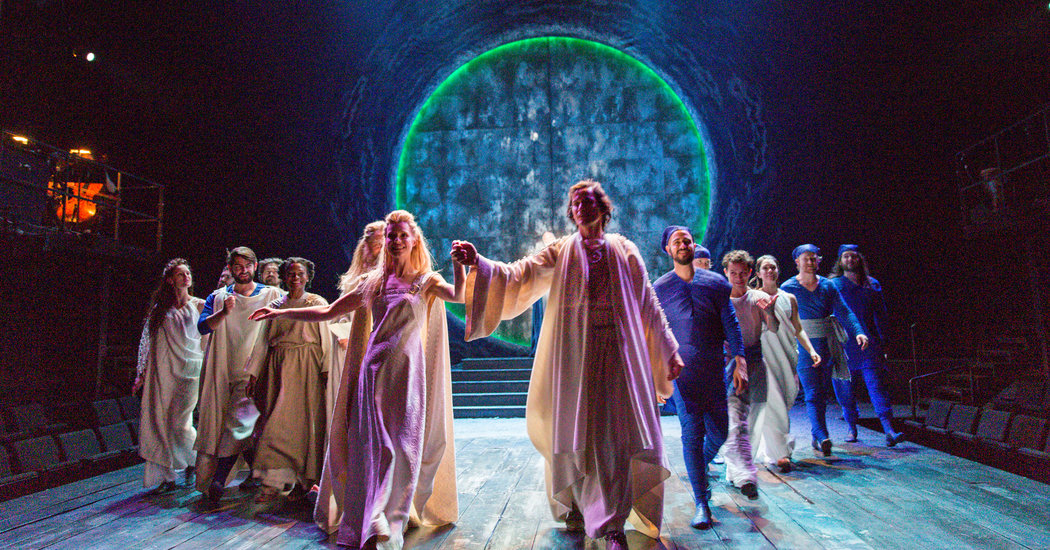
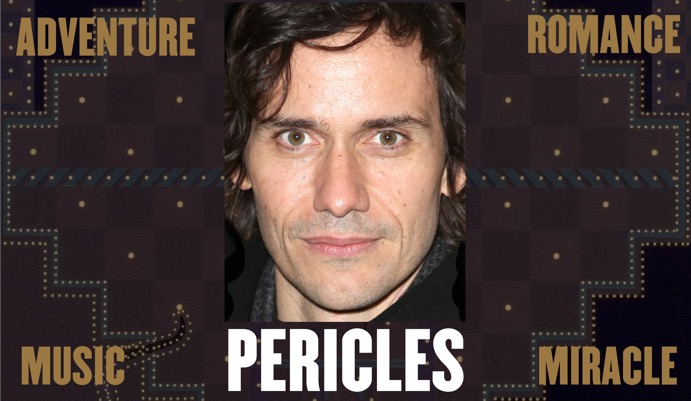 Shakespeare’s Pericles, redolent of The Odyssey, is a drama that has the potential to lift one from the depths of despair and believe that trouble will not last always. Shakespeare’s authorship of Pericles is questioned, and it is thought to be coauthored with George Wilkins. Although neither sublime nor witty, it is an essential play within Shakespeare’s cannon. Neither a comedy nor a tragedy, and not a combination of either, or a historical play, Pericles does not fit nicely within genres of other Shakespearean works. Lacking familiarity with the text, when learning last summer that it was going to be staged at the Folger Shakespeare Library (in December 2015), I secured tickets and set my mind to both read and see the play. Recently, I have become committed to a fresh reading of Shakespearean plays prior to seeing each individual performance. It has allowed me to better understand each play when performed as well as recognize which scenes have been edited from the play, and the depth of each of the edits. That performance was engaging; however, knowing that a local production was on the horizon, I anticipated seeing Theater For A New Audience’s (TFANA) production winter of 2016. Trevor Nunn, a Shakespeare aficionado and formerly the director of both the Royal Shakespeare Company and London’s National Theater, currently stages Pericles at TFANA. (I mistakenly booked my ticket for Oscar night, but I am pleased to say that this performance has great diversity). Trevor Nunn has staged all but one of Shakespeare’s plays, A Midsummer Night’s Dream (he is currently contracted for the performance of two other Shakespeare works). As a comparison between the Folger’s production and TFANA’s production, the costume, the music, and Raphael Nash Thompson’s performance of Gower lift this performance to great heights. The creative team includes: Shaun Davey, the composer, Robert Jones, the scenic designer, Constance Hoffman, the costume designer, and Daniel Kluger, the sound designer. To visually stimulate the senses, at the back of the stage is a huge circle-like structure that opens and closes as various characters enter or exit the stage. This structure was both chimerical and celestial especially at the end when goddess Diana works her mythical powers to bring the play to a beautiful denouement. Gower, however, steals the show from Christian Camargo as Pericles. Singing ebulliently at times and effusively, one can not wait for Gower to reappear after each act. His visage lets us know that he too is enjoying the performance. The Grecian costume design, Gower’s passionate singing (Nunn elected to have Gower sing his lines), and the synchronistic sound design mimicking tempests all catapult this production to a high, leaving the audience connecting to the text, while accomplishing what can be viewed as Shakespeare’s vision of bringing a fable to stage. Although Camargo as Pericles is not this show’s strongest performance, Thompson’s insightful performance brings luminosity to the play. At the end of the performance, however, Camargo ignites his performance resulting in bravo for the entire staging. We, the audience, empathize with Pericles – we feel both his pain and his joy, and the depth of his emotion.


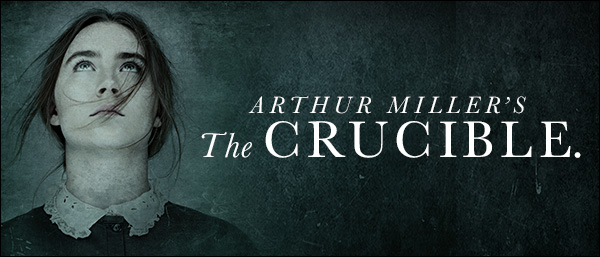
 Last October was the one hundred anniversary of Arthur Miller’s (an American playwrite) birth. Accompanying this anniversary are several works, two of which highlight the witchcraft era. One of his most famous works, The Crucible, uses historical records to recreate the Salem Witch Trials. Within the next week, the theatrical production of TheCrucible will appear on Broadway (directed by Ivo van Hove). Additionally, as a forerunner to the upcoming Broadway production, Robert Eggers’s debut film, The Witch premiered last week. It is set in seventeenth century New England, a few decades preceding the infamous Salem Witch Trials. The Witch is not classic horror, but it has enough horrific scenes to make one uncomfortable. A Sundance favorite, Eggers won best director for this dramatic feature. It is the story of a devout Christian family banished from their puritanical community for actions that are theologically based, but are not specified…
 All the World's a Set