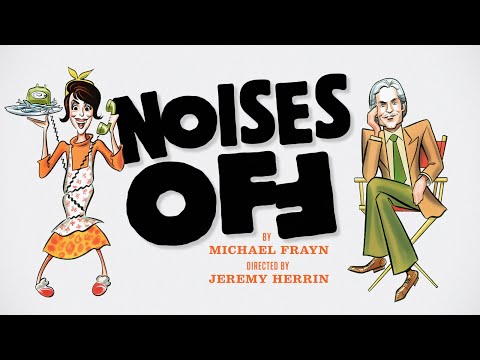
Jeremy Herrin’s Noises Off, a Roundabout Theater performance at American Airlines Theater on Broadway, is a farce, a work of buffoonery and horseplay, involving absurd actions and improbable situations. It is the “Theater of the Absurd” with accomplished actors performing great work delivered with both synchronicity and precision. According to Playbill, citing JG Stillwater: Eros Untrousered– Studies in the Semantics of Bedroom Farce “In a typical bedroom farce, a man and a woman come to some secret or mysterious place to perform certain acts which are supposed to remain concealed from the eyes of the world.” Additionally, “Some partial disrobing may occur, to suggest perhaps a preliminary stripping away of world allusions, but total nudity (perfect truth) and complete ‘carnal knowledge’ (i.e. spiritual understanding) are perpetually forestalled by the intervention of coincidental encounters…” Noises Off has all of these characteristics to a great degree. Characters try to engage in illicit actions, but to no avail. This play stars Andrea Martin, Campbell Scott, Tracee Chimo and Megan Hilty. Andrea Martin walked on stage to great applause. The creative team includes Derek McLane for set design, Michael Krass for costume design, Jane Cox for lighting design, and Christopher Cronin for sound design. Through both a great creative team and awesome actors, this play achieves the unfathomable and keeps the audience in stitches.

Noises Off is a play within a play in which the actors are engaged in a tech rehearsal of their play, “Nothing On.” The fictitious theater company repeats farcical scenes in which characters cannot remember their lines or accompanying actions. While rehearsing for “Nothing On,” Herrin allows us backstage through a set reversal. The entire set is reversed and the actors are upstage, but we cannot see them clearly because we are “backstage.” We see the director of “Nothing On,” giving stage directions to his actors. Some actors become renegade actors, while others try to get their performance acted according to the director’s specifications. It’s a play of sardines and doors, of bags and clothing. One has to see the play to understand how these items are used to elicit guffaws from the audience. Although I less frequently bellowed boisterous laughter, most of the audience could not contain itself and laughed throughout the performance. At times, I said this is just dumb, but other times I just laughed at the comedy, forgetting my proclivity toward serious classical drama.
Herrin’s direction is impeccable. We hear doors slamming, glass shattering, and actions in tandem. Pulling this off is a feat itself. With one wrong move, this play fails; however, it never does. Everything falls and shatters at precise moments and the actors move about peripateticly engaging in repetitive acts. The cadence of the actor’s voices rises and falls in step with the action. No one is ever out of synch. The amount of work needed to achieve success is extraordinary.
The split level and set reversal make the show both great and zany. The actors cannot see what each one is doing on either the bottom or top level of the set, but each actor delivers action with synchronization that one cannot help but applaud the perfection of the actors and the director. Yes, the subject matter is ludicrous. It’s too ludicrous to even discuss in this post. It’s laughable, uproariously laughable.
The characters also make this show laughable. Andrea Martin is funny beyond belief. Her voice is engaging and she delivers her lines repetitively without a break in character. From beginning to end, she is dynamic, never static. She makes this play compelling in all of its ridiculousness. She deserves a Tony nomination for her uncanny performance. Megan Hilty is also noteworthy. In her costume, she makes this play a sexual farce and a burlesque. She plays the part of a woman trying to engage in a sexual liaison with an assignation that never becomes realized. The other actors fall, shake, and all but rattle and roll on the stage. This great ensemble cast makes this show stupendously “stupid.” After all, it is a comedy!
I give this play a positive vote, with one caveat. Check all serious attitudes at the door. It may not be one’s preferred genre, but it is entertaining. Also, sit in the front mezzanine so that a great view can be achieved. It’s playing until March 13, 2016.





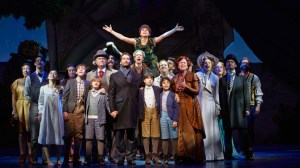



 Last weekend I had dinner with a friend of mine, Joe, who was in town from LA. He brought a friend of his, Mercedes, along to have dinner with us. During our dinner conversation, Mercedes mentioned that she is a professor, currently on sabbatical, from Pomona College. I immediately referenced the writer, Claudia Rankine, a former professor from Pomona. Rankine wrote the cover article for the August 30, 2015 edition of the New York Times Magazine ,as well as Citizen, and many other works. Recently, however, Rankine, became a professor at the University of Southern California. Mercedes and I talked briefly about Rankine and her work. As a result of our conversation, I decided to revisit Rankine’s books. Citizen: An American Lyric, the first one I reread, is a lyrical reflection on the status of race in America. As I revisited the book, I met another woman, who heard Rankine speak last year at NYU; she offered details about Rankine’s process in writing the book. The book includes individual accounts, that may appear to be isolated events in an African-American’s life, but each story has a common thread about racial perceptions in America, and the reactions of Americans, white or otherwise to these events. She references every day events that people of color experience while most white Americans do not consider race as a factor in these events.
 All the World's a Set
